

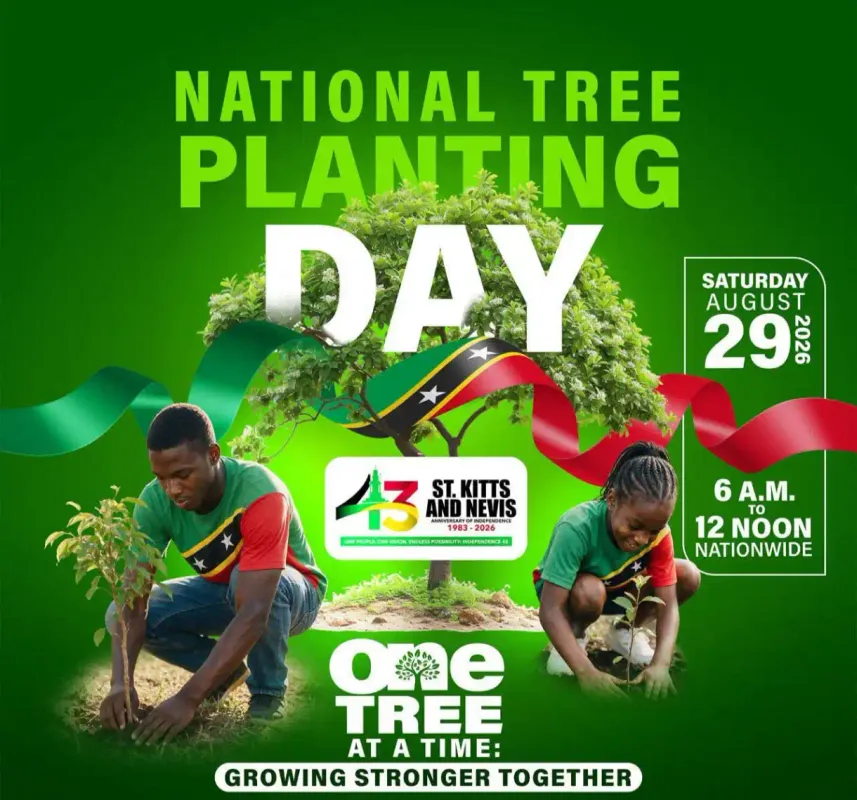
St. Kitts and Nevis is observing its National Tree Planting Day on Saturday, August 29th, as a key event within the broader celebrations marking the nation’s 43rd anniversary of independence. This initiative, scheduled from early morning until noon, is part of a comprehensive calendar of activities designed to foster community engagement and national pride.
Community Engagement and National Unity
Organizers are extending an invitation to residents across both St. Kitts and Nevis to participate in this significant community-focused event. The National Tree Planting Day is one of several themed activities planned throughout August and September to commemorate the independence anniversary. These events aim to cultivate a stronger sense of unity and belonging among the populace as the nation progresses into another year of self-governance.
Environmental and Food Security Goals
Beyond its symbolic importance, the tree planting initiative directly supports several national objectives for St. Kitts and Nevis. The trees planted are expected to contribute to improved food security by offering alternative food sources for families. This aligns closely with the government’s ongoing promotion of a “backyard initiative,” which encourages households to cultivate food-bearing trees in their gardens. The goal of this program is to enhance self-sufficiency by reducing the reliance on imported food products and empowering citizens to source sustenance from their own properties.
A Vision for a Greener Future
Authorities are emphasizing the long-term benefits of this endeavor, urging families to plant trees for a more sustainable and healthier future. Three primary reasons have been highlighted to underscore the importance of this national effort:
- Climate Resilience: Trees provide essential shade, significantly mitigating the impact of rising temperatures and contributing to a more comfortable environment.
- Environmental Protection: The root systems of trees play a crucial role in soil conservation, preventing erosion and safeguarding vital water resources.
- Legacy for Tomorrow: Each tree planted today represents an investment in the future, creating lasting beauty, ecological benefits, and a healthier environment for generations to come, thereby building future resilience.
Broader Context of Independence Celebrations
The 43rd anniversary celebrations are designed to reflect on the nation’s journey since independence and to look forward to its future development. National Tree Planting Day serves as a tangible way for citizens to contribute to the nation’s well-being and environmental health. The timing of this event, embedded within the independence festivities, underscores the connection between national progress, environmental stewardship, and community involvement. The organizers hope that by participating in such activities, citizens will feel a deeper connection to their nation and a shared responsibility for its future prosperity and ecological integrity.
Government Initiatives and Sustainability Efforts
The government of St. Kitts and Nevis has consistently promoted policies aimed at enhancing sustainability and reducing environmental impact. The “backyard initiative” is a prime example of this commitment, seeking to integrate sustainable practices into the daily lives of citizens. By encouraging the planting of food trees, the administration aims to foster a culture of self-reliance and environmental consciousness. National Tree Planting Day amplifies these efforts, providing a platform for collective action and reinforcing the message that environmental health is intrinsically linked to national development and the well-being of its people.
Looking Ahead: Resilience and Growth
As St. Kitts and Nevis commemorates its independence, the focus on sustainability through initiatives like National Tree Planting Day signals a forward-looking approach. The emphasis on planting trees for shade, soil stability, water resource protection, and overall environmental enhancement reflects a strategic effort to build a more resilient nation. These actions are not merely symbolic; they represent concrete steps towards ensuring a healthier environment and a more secure future for all citizens. The collective participation in such events aims to strengthen the social fabric while simultaneously contributing to the ecological resilience of the island nation.
