

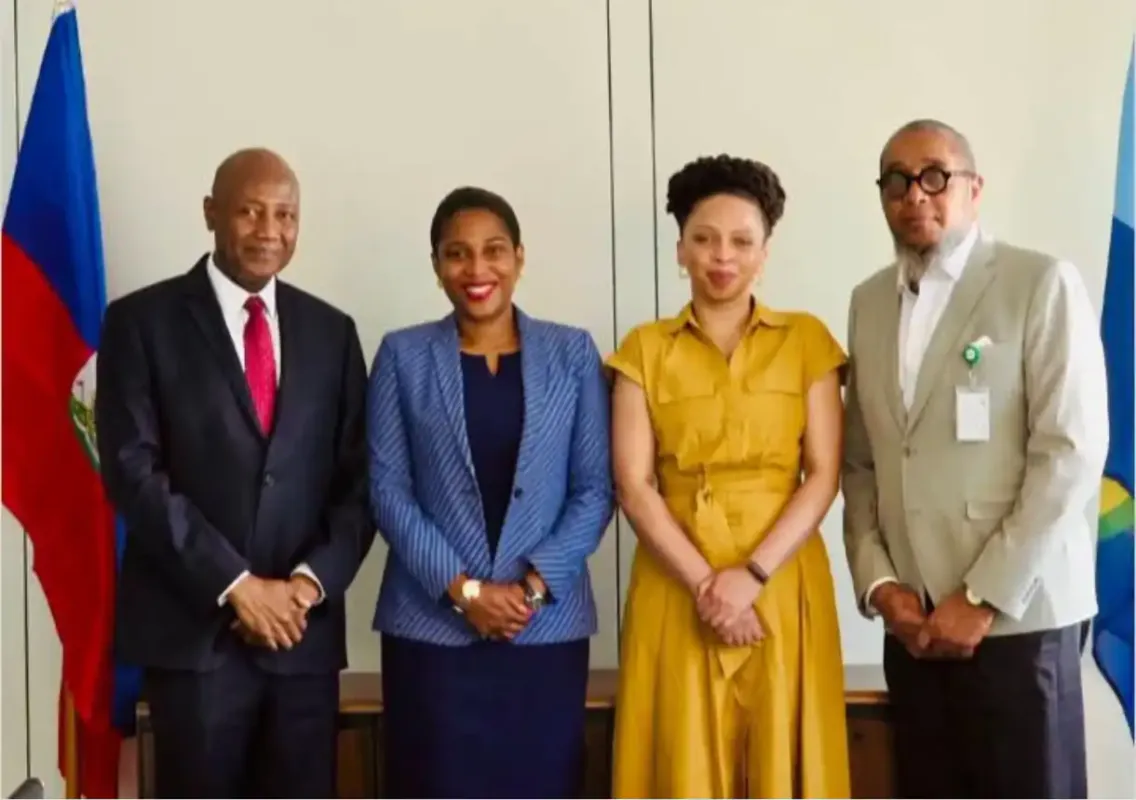
The Commonwealth of Dominica and the Organisation of Eastern Caribbean States (OECS) have officially taken over the leadership of the CARICOM Group in Geneva, succeeding Haiti. This transition marks a significant moment for the Caribbean nations represented in Switzerland, as they navigate a complex global landscape. The handover ceremony, a formal exchange of responsibilities, took place on Wednesday, July 29th, at Haiti’s diplomatic mission in Geneva.
CARICOM Group in Geneva: A United Diplomatic Front
The CARICOM Group in Geneva serves as a crucial coordinating body for the Caribbean Community’s diplomatic missions accredited to the United Nations and other international organizations based in the city. This includes pivotal bodies like the World Trade Organization (WTO). The group’s membership comprises ambassadors and heads of mission from various Caribbean nations, including The Bahamas, Barbados, Belize, Dominica, Guyana, Haiti, Jamaica, Suriname, the OECS, and Trinidad and Tobago.
Operating under the principles of the Revised Treaty of Chaguaramas, the CARICOM Group is mandated to coordinate the foreign policies of its member states. This directive ensures that Caribbean nations can present a unified front on the international stage, amplifying their collective voice and influence. Regular meetings are held by the Geneva-based missions to review and align their positions on critical issues before the numerous UN agencies and international organizations that constitute ‘International Geneva’.
Transition of Leadership and Future Outlook
Haiti concluded its tenure as the rotating annual chairman of the CARICOM Group this week. The leadership now passes to the OECS and Dominica for the upcoming year. This change in chairmanship is a customary part of the group’s operational structure, ensuring shared leadership and diverse perspectives.
The Permanent Delegation of the OECS in Geneva is led by Ambassador Colin Murdoch, while the mission of the Commonwealth of Dominica is headed by Chargé d’Affaires Kamila Bell. Both diplomats are poised to guide the group through the next twelve months.
Key Statements from the Handover Ceremony
During the formal handover ceremony, Chargé d’Affaires Kamila Bell addressed the assembled ambassadors and officials. She candidly acknowledged the challenging international environment the Group is expected to navigate in the coming year. Bell stated, “Our group faces a challenging year ahead because of the volatility in international relations and the many changes taking place.” However, she expressed a commitment to collaborative efforts, adding, “but we will work assiduously with our colleagues to secure and promote the interests of the small states of the Caribbean region.” Her remarks underscored the strategic importance of unity and proactive diplomacy for smaller nations on the global stage.
Ambassador Colin Murdoch also delivered remarks, emphasizing the critical role of effective coordination and collective leadership in advancing the region’s priorities. His address highlighted the shared responsibility among member states to leverage their diplomatic presence in Geneva to achieve common goals, particularly in areas of trade, development, and international cooperation.
The Strategic Importance of Geneva for Caribbean Nations
Geneva serves as a vital hub for international diplomacy and trade negotiations. For Caribbean nations, particularly small island developing states (SIDS), having a coordinated presence in such a forum is paramount. The CARICOM Group’s activities in Geneva are instrumental in:
- Advocating for SIDS Interests: Ensuring that the unique challenges and priorities of small island states are heard and addressed in global policy discussions, especially concerning climate change, sustainable development, and economic vulnerability.
- Trade Negotiations: Coordinating positions on trade agreements and disputes within the World Trade Organization, aiming to secure favorable terms and protect regional economic interests.
- International Cooperation: Building alliances and fostering partnerships with other nations and international organizations on issues ranging from health and education to security and environmental protection.
- Policy Alignment: Harmonizing foreign policy stances on key global issues, thereby strengthening the collective bargaining power of CARICOM member states.
The leadership transition from Haiti to Dominica and the OECS signifies the ongoing commitment of Caribbean nations to multilateralism and the pursuit of shared objectives through strategic diplomatic engagement. The focus for the upcoming year will undoubtedly be on navigating global uncertainties while championing the collective interests of the Caribbean region.
Looking Ahead: Challenges and Opportunities
The coming year presents both significant challenges and opportunities for the CARICOM Group in Geneva. Global geopolitical shifts, economic uncertainties, and the ongoing impacts of climate change require a robust and agile diplomatic response. Under the joint leadership of Dominica and the OECS, the group is expected to intensify its efforts in:
- Climate Action Advocacy: Continuing to push for stronger global commitments and support for climate adaptation and mitigation measures, a critical issue for low-lying island nations.
- Economic Resilience: Seeking international support and policy frameworks that enhance economic diversification and resilience against external shocks.
- Digital Transformation: Exploring opportunities for collaboration in leveraging digital technologies for economic growth and improved public services.
- Strengthening Multilateralism: Reinforcing the importance of international law and cooperation in addressing global challenges.
The successful execution of these objectives will depend on the continued dedication and collaborative spirit of all CARICOM member states represented in Geneva. The leadership of Chargé d’Affaires Kamila Bell and Ambassador Colin Murdoch will be pivotal in steering the group towards achieving its mandate and effectively representing the Caribbean’s interests on the world stage.
