

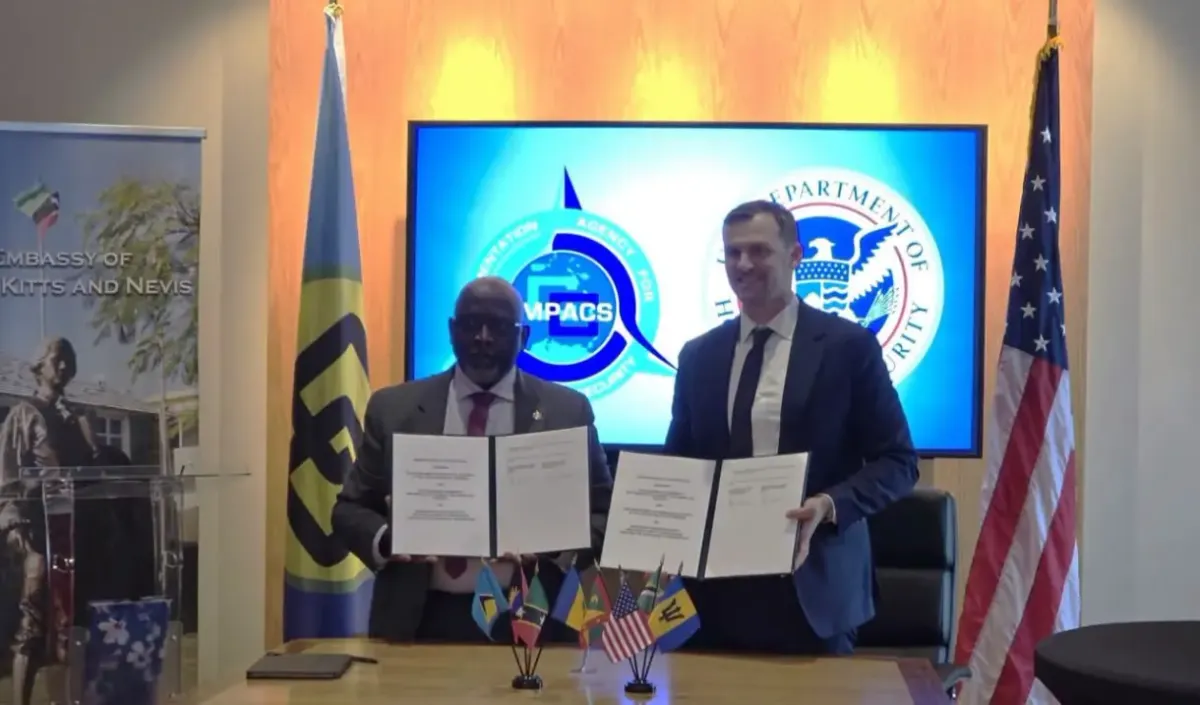
A significant Memorandum of Cooperation (MOC) has been established between the Caribbean Community Implementation Agency for Crime and Security (CARICOM IMPACS) and the U.S. Department of Homeland Security (DHS). This agreement, formalized on July 13, 2026, aims to bolster regional security through enhanced information sharing and collaborative risk assessment, particularly focusing on biometric data. The signing ceremony, hosted by the Embassy of St. Kitts and Nevis to the United States in Washington, D.C., was attended by officials from several Caribbean nations and the Eastern Caribbean Central Bank, underscoring the broad regional implications of this security partnership.
Enhancing Regional Security Through Biometric Data Sharing
The core of this new cooperation lies in the Biometric Data Sharing Partnership (BDSP), facilitated by the MOC. This initiative will enable CARICOM IMPACS and DHS to share crucial information related to biometric identity verification. By working together on managing risk assessments, both organizations intend to significantly strengthen the security infrastructure across CARICOM member states and associate members. This collaborative approach is designed to be a proactive measure against transnational crime and to enhance border security.
According to CARICOM IMPACS, the agreement represents a vital step forward in safeguarding the region. The shared commitment extends beyond mere documentation, signifying a tangible dedication to securing borders and ensuring the safety of citizens throughout the Caribbean. This partnership is expected to yield practical benefits in law enforcement efforts and the overall security posture of the participating nations.
Strengthening Citizenship by Investment Programs
A key area that will benefit from this enhanced cooperation is the security of Citizenship by Investment (CBI) programs within the Organisation of Eastern Caribbean States (OECS). The MOC provides a framework for more rigorous background checks and biometric identity verification processes before citizenship is granted. This is crucial for detecting potential fraud and ensuring the integrity of these programs, which are vital economic drivers for several Caribbean nations.
The Embassy of St. Kitts and Nevis to the United States highlighted that this collaboration reinforces border security and provides essential support to law enforcement agencies. The framework established by the MOC is specifically designed to facilitate secure information exchange, enabling more effective biometric identity verification and collaborative risk assessment. These measures are intended to create a more robust defense against illicit activities and strengthen the security of the region as a whole.
A Milestone in US-Caribbean Security Cooperation
Lt. Col. Michael Jones, Executive Director of CARICOM IMPACS, described the signing as a significant milestone in the ongoing security cooperation between the United States and the Caribbean region. He emphasized that the agreement is more than just a formal document; it represents a concrete, shared resolve to fortify regional borders and enhance public safety. This sentiment was echoed by the participating officials, who recognized the importance of unified action in addressing complex security challenges.
Key Participants and Objectives
The meeting convened a diverse group of stakeholders, including:
- Officials from Antigua and Barbuda
- Representatives from Dominica
- Government officials from Grenada
- Representatives from St. Kitts and Nevis
- Officials from St. Lucia
- Delegates from St. Vincent and the Grenadines
- Representatives from the Eastern Caribbean Central Bank
- Senior officials from the U.S. Government
The overarching objectives of the MOC include:
- Enhancing border security across CARICOM member states.
- Providing robust support for law enforcement operations.
- Combating transnational crime more effectively.
- Strengthening the integrity of immigration and citizenship processes.
- Facilitating secure and efficient biometric data sharing.
Future Implications and Regional Impact
The partnership between CARICOM IMPACS and DHS is poised to have a lasting positive impact on regional security. By leveraging advanced biometric technology and fostering closer collaboration, the initiative aims to create a more secure environment for residents and visitors alike. The focus on information sharing and risk assessment is expected to improve intelligence gathering and enable more targeted interventions against criminal networks operating within and across the Caribbean.
This agreement underscores a growing recognition of the interconnected nature of security challenges in the modern era. The commitment to a shared security agenda between the U.S. and the Caribbean nations signifies a proactive approach to safeguarding national interests and promoting regional stability. The successful implementation of the Biometric Data Sharing Partnership will be a critical factor in achieving these ambitious security goals.
In conclusion, the Memorandum of Cooperation between CARICOM IMPACS and the U.S. Department of Homeland Security marks a new era of security collaboration. It provides a vital framework for addressing contemporary security threats through advanced technology and coordinated efforts, ultimately contributing to a safer and more secure Caribbean region.
