

Nevis Achieves Historic Milestone with First Space Life Science Experiment
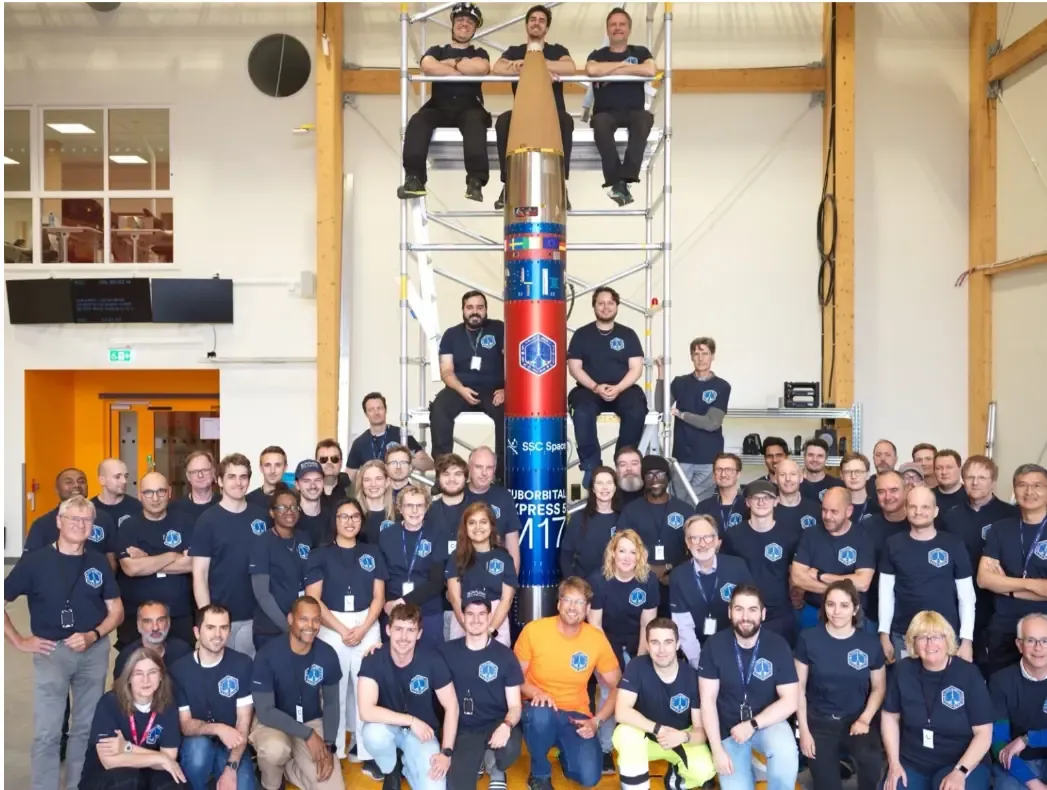
Nevis has marked a significant advancement in scientific exploration by successfully launching the Caribbean’s inaugural space life sciences experiment. The critical mission took flight on May 31, 2026, aboard the SSC SubOrbital Express SIX-5/M17 mission, departing from the Esrange space Centre in Kiruna, Sweden.
Officials emphasized that this achievement underscores the island’s burgeoning growth in science, education, and innovation. The successful launch positions St. Kitts and Nevis as an active contributor to global space science and research endeavors.
A Collaborative Effort for Scientific Advancement
The ambitious project was brought to fruition through a collaborative partnership involving the Ministry of Education of Nevis, the University of Zurich (UZH), and the Centre for Space and Aviation Switzerland and Liechtenstein. This initiative is seen as a pivotal moment not only for Nevis but also for the broader Caribbean region, demonstrating that small island states can play a substantial role in cutting-edge scientific research and technological progress.
Investigating Human Health in Space
At its core, the experiment aims to observe the reactions of human immune cells to varying gravitational conditions. This includes a detailed study of the impact of microgravity and hypergravity on gene expression and cellular function. The findings are expected to contribute significantly to international research focused on human health during spaceflight and extended missions.
Empowering Educators and Strengthening STEM
The launch also highlights Nevis’s sustained investment in capacity building, education, and international collaboration. As a key component of the project, four science teachers from Nevis were selected to work alongside leading international scientists. These educators played an integral role in the design and implementation of the experiment, gaining invaluable hands-on experience in space research and advanced scientific methodologies.
Through this international collaboration, teachers and students from the island are receiving direct exposure to real-world scientific research. The development of this project has also facilitated the establishment of new laboratory facilities and enhanced research capabilities within the Federation. This initiative is credited with strengthening STEM (Science, Technology, Engineering, and Mathematics) education, forging direct connections between classroom learning and global scientific exploration.
