

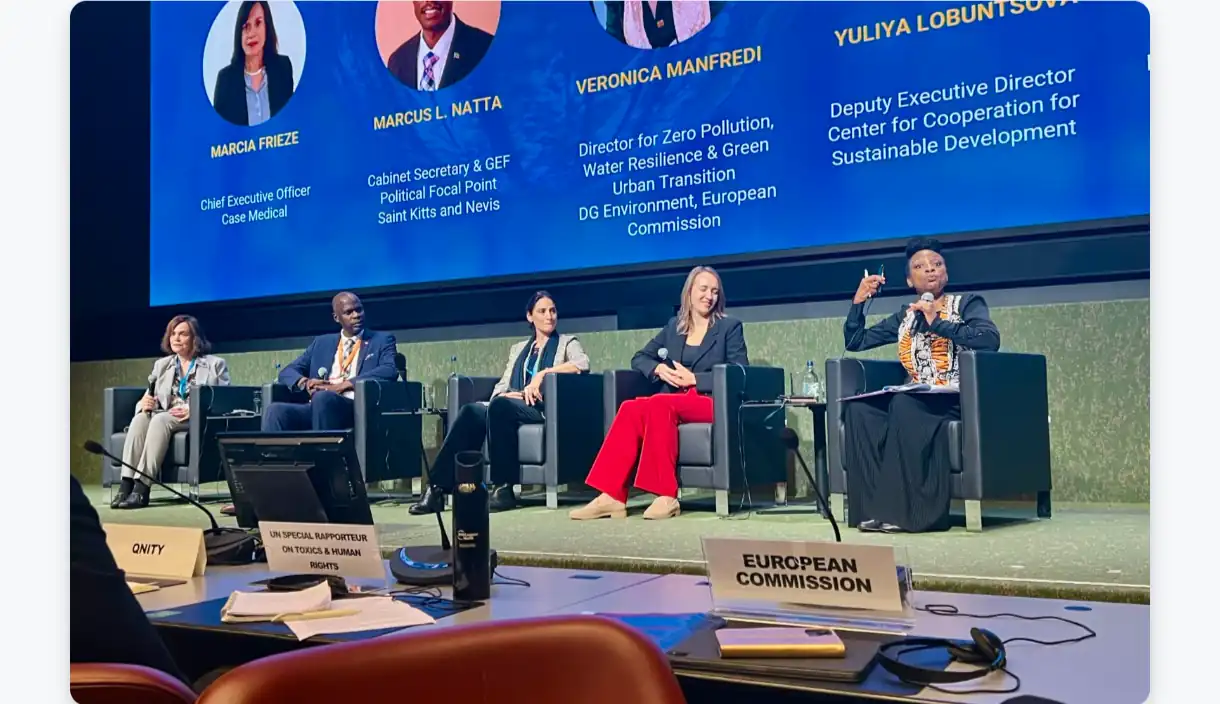
Dr Marcus L. Natta, Cabinet Secretary in the government of St. Kitts and Nevis, represented the Federation at the High-Level Dialogue of the first International Conference of the Global Framework on Chemicals (IC1) in Geneva. The dialogue concluded on November 19, 2026.
The gathering gave the small island nation a platform to bring its concerns before international policymakers and major players in the chemical industry.
IC1 took place at the Geneva International Conference Centre from November 16 to 20, 2026. Officials described it as the first global conference under the Global Framework on Chemicals since its adoption in 2023. The programme centred on three themes: tracking progress, accelerating action, and investing for impact.
Dr Natta participated in the panel discussion “Transparency without overload” during the High-Level Dialogue on November 18–19. The session explored the product and chemical information needed to measure progress reliably, as well as how that information can move through value chains without placing excessive demands on governments, businesses and communities.
Officials highlighted the importance of this issue for governments worldwide, which need dependable information about the chemicals contained in products.
However, existing reporting systems were described as fragmented, expensive and difficult to compare. A more coordinated approach could strengthen accountability, support better risk management and increase public confidence, provided that information-sharing arrangements remain practical, proportionate and compatible across systems.
During his contribution, Dr Natta outlined the challenges confronting small island developing states. He explained that these countries manufacture very few chemicals but import nearly all those they use, often within everyday goods such as electronics, construction materials, vehicles, plastics, cosmetics and pesticides. Islands must then manage these products at the end of their useful lives despite limited landfill capacity and vulnerable coastal and marine environments.
He urged producer countries and industry representatives to develop chemical information systems that take the needs of the smallest users into account. “If the system works for St. Kitts and Nevis, it will work for everyone,” he said.
Dr Natta also emphasised that chemical pollution extends beyond land. Runoff from agricultural chemicals, contamination left by past activities, and plastics and their additives can reach coral reefs and fisheries, threatening resources that support tourism and food security.
He added that access to information about chemicals in products is also a matter of ocean governance. It is closely connected to climate resilience, he said, because hurricanes and other disasters can release hazardous chemicals into the environment.
