

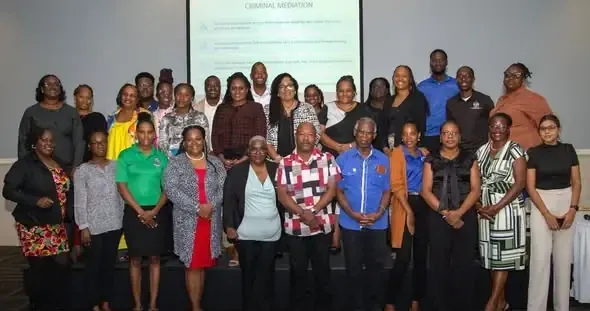
St. Kitts and Nevis is currently hosting the second phase of its Criminal Mediation Training Programme, a crucial initiative aimed at enhancing the nation’s justice system. This follow-up training, scheduled from August 24 to August 27, 2026, builds upon the foundational work completed in the first phase held in June 2026. The program is designed to equip participants with advanced skills and knowledge necessary for the successful implementation of criminal mediation and restorative justice principles within the country.
Building on Success: Phase One and Program Objectives
The initial phase of the training, a five-day intensive program, was successfully conducted in June 2026. It was facilitated by the Society of Mediators, an organization based in London, and collaborated closely with the Ministry of Justice and Legal Affairs. The primary goal of this earlier session was to lay the groundwork for strengthening and modernizing the criminal justice framework. A significant outcome of the first phase was the focus on establishing a comprehensive restorative justice framework, setting the stage for the more advanced training now underway.
This current, four-day training represents a significant step forward in the government’s commitment to refining its justice system, making it more contemporary and effective. Officials have emphasized that the second phase is specifically structured to further prepare participants for their future roles within a developing national mediation framework. This preparation is vital for ensuring that the principles of restorative justice and mediation are not only understood but also practically applied within the legal and community settings.
Key Focus Areas and Skill Development
The Society of Mediators, continuing its role as facilitator, has outlined the core areas of focus for this second phase. The training delves deeply into operational procedures, ensuring that participants understand the practicalities of implementing mediation processes. Safeguarding principles are a paramount concern, ensuring that all mediation activities are conducted with the utmost care for the well-being of all involved parties. Ethical requirements are also thoroughly examined, reinforcing the professional standards expected of mediators. Crucially, the program emphasizes practical application through a series of intensive exercises, role-playing scenarios, and mediation simulations. These hands-on activities are designed to bridge the gap between theoretical knowledge and real-world application, allowing participants to hone their skills in a controlled environment.
The Ministry of Justice and Legal Affairs is spearheading this effort to cultivate local expertise in restorative justice and criminal mediation. By building this capacity internally, the government aims to ensure the long-term sustainability and effectiveness of these alternative dispute resolution methods. The training is not merely about procedural understanding; it is fundamentally about empowering individuals to foster dialogue, promote accountability, support rehabilitation, and achieve more effective conflict resolution within the community and the justice system.
The Role of Criminal Mediation and Restorative Justice
Criminal mediation and restorative justice represent a shift in how the justice system approaches offenses. Instead of solely focusing on punishment, these approaches emphasize repairing harm, addressing the needs of victims, and promoting the reintegration of offenders into society. Restorative justice, in particular, seeks to involve all parties affected by a crime—victims, offenders, and the community—in a process that aims to achieve healing and accountability.
Criminal mediation, as a component of restorative justice, provides a structured process where a neutral third party, the mediator, helps facilitate communication between the victim and the offender. This can lead to a better understanding of the impact of the offense, allow the victim to express their feelings and concerns directly, and give the offender an opportunity to take responsibility and make amends. The ultimate goal is to find solutions that address the harm caused and prevent future offenses.
The skills participants are developing through this training are multifaceted. They include active listening, empathetic communication, conflict de-escalation, negotiation, and the ability to guide parties toward mutually agreeable outcomes. These skills are essential for mediators to effectively navigate complex and often emotionally charged situations that arise in criminal cases. By strengthening these capabilities, St. Kitts and Nevis is investing in a more holistic and potentially more effective approach to justice.
Looking Ahead: Integration and Future Impact
The successful completion of this training program is expected to have a tangible impact on the administration of justice in St. Kitts and Nevis. Participants, once fully trained and integrated into the national framework, will play a pivotal role in implementing mediation services. This could lead to reduced caseloads in traditional courts, faster resolution of certain types of offenses, and improved outcomes for victims and offenders alike. The government has indicated its intention to continue providing updates on the progress of the program and its subsequent integration into the broader justice system.
The commitment to ongoing professional development and capacity building in areas like criminal mediation underscores a forward-thinking approach to governance and legal reform. By embracing these modern methodologies, St. Kitts and Nevis is positioning itself to build a more responsive, equitable, and effective justice system for all its citizens.
