

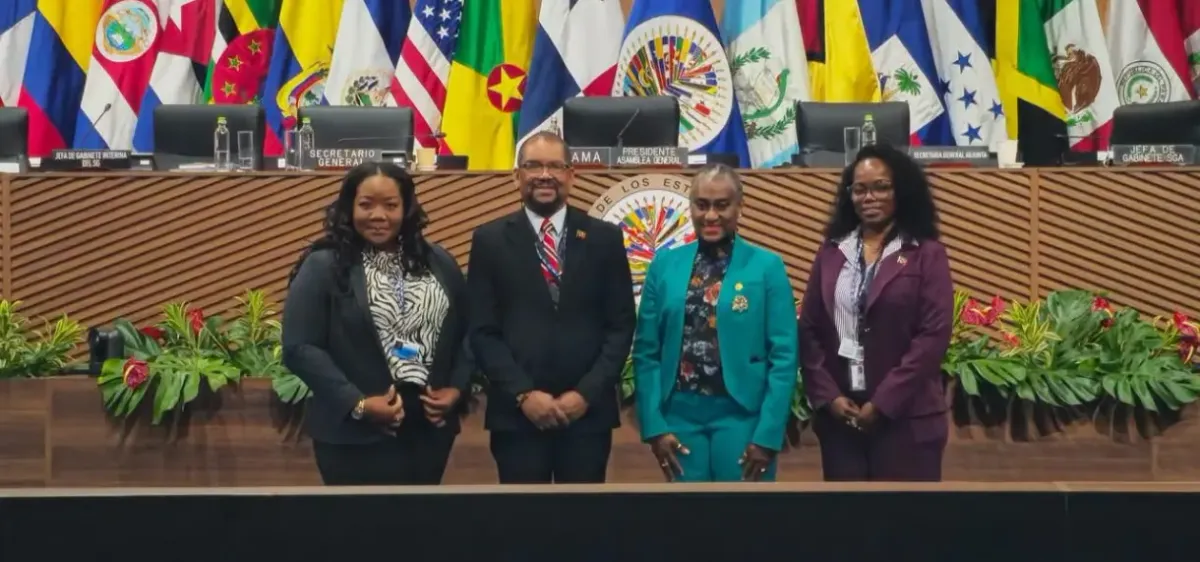
Ambassador Advocates for Multilateralism at OAS General Assembly
Jacinth Henry-Martin OBE, St. Kitts and Nevis’s Ambassador to the United States and Permanent Representative to the Organization of American States (OAS), recently participated in the 56th Regular Session of the OAS General Assembly. The significant international gathering convened in Panama City at the ATLAPA Convention Centre from June 22 to 24, 2026.
Focus on Multilateralism and Sustainable Development
The three-day assembly centered on the theme “The Americas United on the Bicentennial of the Amphictyonic Congress of Panama.” A key overarching topic for discussion was “Multilateralism in Defense of Democracy: Hemispheric Security and Stability in the American States.” The proceedings included an opening session on June 22, followed by plenary sessions and dialogues on the second day. The assembly concluded on June 24 with a final plenary session featuring elections, reports, and closing remarks.
During her address, Ambassador Henry-Martin highlighted the critical role of multilateral cooperation in navigating complex global challenges. She stated, “At a time when global challenges increasingly transcend borders, multilateral cooperation remains the most effective means through which states, large, small alike, can advance means through, uphold shared values and ensure that no nation faces its challenges alone.”
Championing St. Kitts and Nevis’s Sustainable Vision
The Ambassador also seized the opportunity to elaborate on the federation’s ambitious initiative to become the world’s first sustainable island state. She emphasized that this agenda reflects a strong commitment from the administration to foster innovation, resilience, sustainability, and inclusiveness within St. Kitts and Nevis.
Addressing Climate Justice and Financial Reform
Furthermore, Ambassador Henry-Martin addressed the pressing global threat of climate change. She advocated for climate justice, calling for enhanced access to concessional financing and reforms within the international financial architecture. “Climate Justice requires greater access to concessional financing reform of the international financial architecture, and recognition that vulnerability, not income alone, must inform development support,” Martin asserted, underscoring the need to consider vulnerability over income alone when determining development support.
