

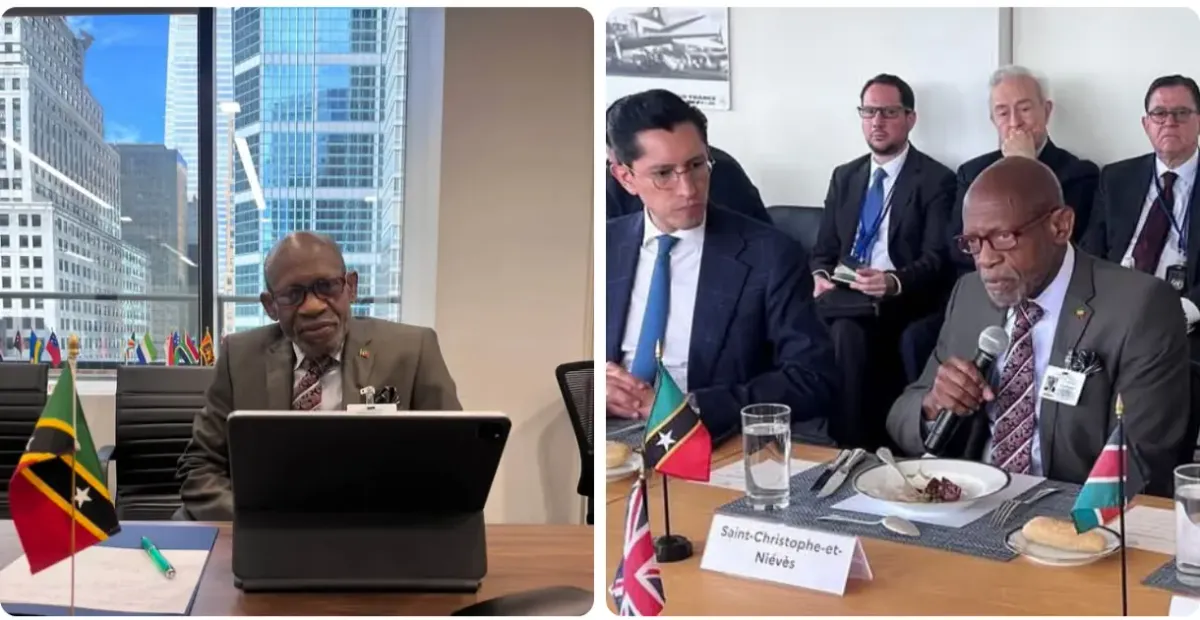
Caribbean leaders, including Dr. Denzil Douglas of St. Kitts and Nevis, have reaffirmed their strong backing for Guyana’s bid to secure the position of United Nations Secretary-General. This significant endorsement occurred during the 26th Special Meeting of the Council for Foreign and Community Relations of CARICOM, held on the sidelines of broader UN General Assembly discussions.
CARICOM’s United Front for Guyana’s UN Candidacy
The Council for Foreign and Community Relations (COFCOR), a key body within the Caribbean Community (CARICOM), formally expressed its unwavering support for the candidacy of Caroline Rodriguez-Birkett. As Guyana’s Ambassador and Permanent Representative to the United Nations, Rodriguez-Birkett represents a historic opportunity for the Caribbean region to enhance its presence and influence on the global stage. The collective backing from CARICOM nations underscores a unified regional strategy to elevate Caribbean voices in international diplomacy.
Dr. Douglas, who serves as the Senior Minister and Minister of Foreign Affairs for St. Kitts and Nevis, was a prominent participant in these crucial discussions. His presence and active engagement signaled the federation’s commitment to this regional initiative. The decision to support a Caribbean national for the UN’s top job is seen as a strategic move to amplify the concerns and perspectives of small island developing states (SIDS) on critical global issues.
Addressing Global Challenges: The Franco-Mexican Initiative
Beyond the focus on the UN Secretary-General candidacy, Dr. Douglas also participated in a significant meeting concerning the Franco-Mexican Initiative. This initiative, now in its eleventh year, aims to regulate the use of the veto power within the UN Security Council, particularly in instances involving mass atrocities. France and Mexico have been instrumental in building international consensus around this proposal, seeking to enhance accountability and prevent inaction in the face of severe human rights violations.
The meeting on the sidelines of the UN General Assembly saw several additional member states lend their support to the Franco-Mexican Initiative. This growing coalition reflects an increasing global desire to reform UN Security Council dynamics and ensure more effective responses to humanitarian crises. Dr. Douglas’s participation highlights St. Kitts and Nevis’s engagement with pressing global governance issues and its willingness to contribute to international efforts aimed at improving global security mechanisms.
St. Kitts and Nevis’s Broader Diplomatic Engagements
Dr. Douglas’s diplomatic agenda extended to numerous other engagements during this period. He met with various international community members to explore avenues for collaboration and cooperation that could yield tangible benefits for St. Kitts and Nevis. These discussions are vital for a small island nation seeking to navigate complex international relations and secure its interests in areas such as economic development, trade, and security.
Meanwhile, Dr. Geoffrey Hanley, the Acting Prime Minister and Head of the St. Kitts and Nevis Delegation to the 81st UN General Assembly, was scheduled to deliver the Federation’s National Address on Friday, September 25th. His address was expected to articulate St. Kitts and Nevis’s key priorities, focusing on issues particularly pertinent to small island states. These include the existential threat of climate change, the urgent need for robust climate action, and the critical importance of disaster preparedness and resilience in the face of increasing environmental challenges.
The Significance for Small Island Developing States
The dual focus on supporting a Caribbean candidate for UN Secretary-General and engaging with initiatives like the Franco-Mexican Initiative underscores a broader trend of increased assertiveness and strategic engagement by CARICOM nations on the world stage. For small island developing states, securing a prominent position within the UN system and advocating for reforms that address their unique vulnerabilities is paramount.
Issues such as climate change disproportionately affect SIDS, threatening their very existence through rising sea levels and increased frequency of extreme weather events. By championing a candidate for the UN’s top post and participating in discussions on Security Council reform, Caribbean nations aim to ensure that their concerns are not only heard but also acted upon by the international community. The coordinated efforts by leaders like Dr. Douglas and Dr. Hanley reflect a sophisticated approach to diplomacy, leveraging regional solidarity to achieve national and collective goals.
Looking Ahead: Regional Unity and Global Impact
The strong show of support from CARICOM for Guyana’s UN Secretary-General bid is a testament to the region’s growing diplomatic maturity and its commitment to collective action. As Caroline Rodriguez-Birkett seeks to make history, the unified backing from her Caribbean peers provides a significant boost to her campaign. This regional solidarity is crucial not only for this specific candidacy but also for advancing the broader interests of the Caribbean on the global stage, ensuring a more equitable and responsive international order.
The ongoing diplomatic engagements by St. Kitts and Nevis, both at the CARICOM level and through bilateral meetings, highlight the proactive stance taken by the federation to enhance its international standing and address pressing global and regional challenges. The upcoming national address by Acting Prime Minister Hanley is anticipated to further solidify these positions, emphasizing the critical agenda items for small island developing states in the international arena.
